
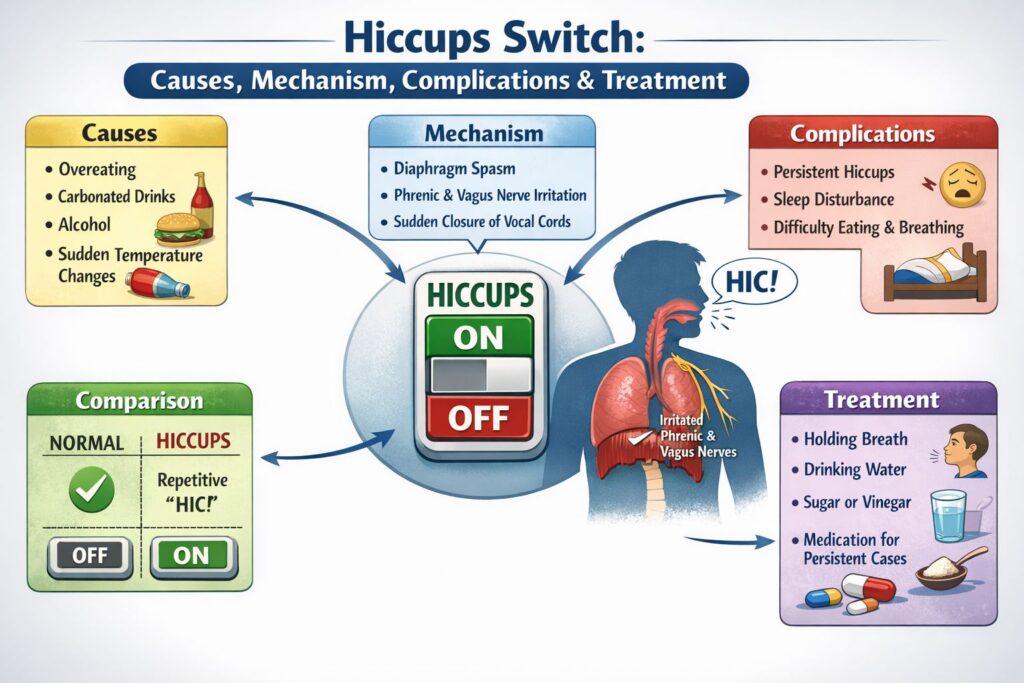
Hiccups, medically known as singultus, are sudden, involuntary contractions of the diaphragm, followed by a quick closure of the vocal cords, producing the characteristic “hic” sound. While most episodes are brief and harmless, continuous hiccups lasting more than 48 hours can interfere with daily life and may indicate underlying medical problems. Persistent hiccups can lead to sleep disturbance, social embarrassment, weight loss, poor nutrition, and psychological stress, making early recognition and treatment essential.
This article provides a detailed overview of the causes, underlying mechanisms, symptoms, related disorders, and treatment options, including pharmacological, procedural, and behavioral interventions.
⸻
Physiology and Mechanism of Hiccups
Hiccups are a reflex involving a reflex arc with three major components:
1. Afferent pathways: Sensory nerves including the vagus, phrenic, and sympathetic nerves detect irritation in the diaphragm, stomach, esophagus, or chest.
2. Central processing unit: Located in the brainstem, primarily in the medulla oblongata, this region processes the sensory signals.
3. Efferent pathways: Motor nerves stimulate the diaphragm to contract abruptly, leading to sudden inhalation and closure of the glottis, producing the hiccup sound.
When this reflex becomes overactive or dysregulated, hiccups can become persistent or intractable.
⸻
Classification Based on Duration
Hiccups are classified as:
• Acute hiccups: Last a few minutes to a few hours; usually self-limiting.
• Persistent hiccups: Last more than 48 hours and may require medical attention.
• Intractable hiccups: Last longer than one month and often indicate serious underlying pathology.
This article focuses on persistent and intractable hiccups, which can significantly affect quality of life.
⸻
Causes of Continuous Hiccups
Continuous hiccups can arise from multiple systems:
1.Gastrointestinal Causes
• Esophageal irritation: GERD, acid reflux, or esophageal tumors can stimulate the vagus and phrenic nerves.
• Gastric distension: Overeating, carbonated drinks, or delayed gastric emptying can irritate the diaphragm.
• Hiatal hernia and peptic ulcers: Structural gastrointestinal issues may trigger persistent hiccups.
• Salivary disorders: Excessive salivation (sialorrhea) or impaired swallowing can indirectly affect upper digestive tract nerve pathways, sometimes initiating hiccups.
• Fetal greed: In pregnant women, rapid uterine growth may compress the stomach or diaphragm, triggering hiccups reflexively.
⸻
2.Neurological Causes (Dis-Neuralism)
The term “dis-neuralism” refers to dysfunction or irritation in the nervous system controlling diaphragm contraction. Causes include:
• Brainstem lesions (stroke, tumor, trauma)
• Multiple sclerosis
• Peripheral neuropathies affecting the phrenic or vagus nerves
Neurological irritation is a common cause of intractable hiccups, particularly when accompanied by other neurological deficits such as weakness, dizziness, or speech problems.
⸻
4.Metabolic and Systemic Causes
Metabolic imbalances can disrupt diaphragmatic function and nerve signaling:
• Electrolyte imbalances (low sodium, potassium, calcium)
• Kidney failure (uremia)
• Thyroid dysfunction
• Weight loss and poor naturalization: Chronic illness, anorexia, or malnutrition can weaken diaphragm muscles, impair nerve function, and predispose to persistent hiccups.
⸻
4.Respiratory Causes
• Pneumonia, pleuritis, bronchitis, or asthma exacerbations can irritate the diaphragm or chest nerves, triggering hiccups.
• Chronic respiratory disorders like COPD may contribute to intractable hiccups over time.
⸻
5.Psychogenic and Social Factors
• Social distress or anxiety may exacerbate hiccups through autonomic nervous system dysfunction.
• Anorexia nervosa can contribute due to malnutrition, gastric irritation, and weakened diaphragm function.
• Behavioral stressors may amplify the frequency and severity of hiccups in sensitive individuals.
⸻
6.Drug-Induced Causes
Certain medications may trigger hiccups:
• Steroids: Increase neural excitability and may irritate gastrointestinal tract.
• Benzodiazepines: Paradoxically, some patients develop hiccups due to CNS effects.
• Opiates: Can alter central diaphragm reflexes.
• Chemotherapy agents: Certain cytotoxic drugs can provoke diaphragmatic spasms.
⸻
Symptoms of Continuous Hiccups
Persistent hiccups present as:
• Frequent, involuntary “hic” sounds that interfere with speech and eating
• Sleep disturbance or insomnia
• Weight loss and poor nutritional intake due to difficulty eating
• Pain or discomfort in the chest or abdomen
• Social embarrassment and distress
• Fatigue and malaise
Complications may include dehydration, esophageal irritation, worsening GERD, malnutrition, and, rarely, cardiac arrhythmias.
⸻
Diagnosis of Continuous Hiccups
Evaluation involves identifying the underlying cause:
1.Clinical History
• Duration, onset, frequency, and triggers
• Associated symptoms such as nausea, vomiting, heartburn, or neurological deficits
• Medication and drug history (steroids, benzodiazepines, opiates, chemotherapy)
• Psychosocial stressors
2.Laboratory Investigations
• Electrolytes (sodium, potassium, calcium, magnesium)
• Kidney and liver function tests
• Thyroid function and blood glucose
• Nutritional status assessment
3.Imaging
• Chest X-ray or CT scan (lung, diaphragm, or mediastinum)
• MRI of brain and brainstem (if CNS causes suspected)
• Ultrasound or endoscopy for gastrointestinal evaluation
4.Specialized Tests
• Esophageal pH monitoring for GERD
• Nerve conduction tests (phrenic/vagus nerve evaluation)
• Psychiatric evaluation for psychogenic triggers
⸻
Treatment of Continuous Hiccups
Treatment depends on underlying cause and severity.
1.Non-Pharmacological Measures
• Breathing exercises, holding breath, sipping cold water, or gargling
• Vagal maneuvers such as carotid massage or swallowing sugar
• Behavioral interventions: Computer-assisted therapy for anorexia nervosa can improve nutritional intake and indirectly reduce hiccups
2.Pharmacological Therapy
Persistent hiccups often require medications:
Steroids
• Reduce inflammation or neural excitability; caution required due to systemic side effects
Benzodiazepines
• Relax muscles, reduce anxiety, and suppress hiccup reflex
Opiates
• Central nervous system effect; sometimes used in hospital under supervision
Chlorpromazine
• Common first-line drug for persistent hiccups; acts on CNS pathways
Baclofen
• Muscle relaxant targeting diaphragmatic spasms
Gabapentin
• Effective for nerve irritation or neuropathic causes
Proton Pump Inhibitors (PPIs)
• Treat GERD-related hiccups
⸻
3.Procedural Options
• Vagus nerve stimulation: Modulates neural signaling to diaphragm
• Phrenic nerve block: Temporarily interrupts hiccup reflex
• Surgery: Rarely, to remove tumors or correct anatomical defects
⸻
Special Considerations in Pregnancy
• Fetal pressure or “fetal greed” can compress the stomach or diaphragm, leading to hiccups.
• Medication choice must consider fetal safety.
• Nutritional support and behavioral counseling help mitigate weight loss and poor nutrition.
⸻
Prevention and Lifestyle Measures
• Eat smaller, frequent meals
• Avoid carbonated drinks and overeating
• Maintain good posture to reduce gastric distension
• Reduce stress through relaxation techniques
• Ensure adequate nutrition to prevent malnutrition-induced hiccups
⸻
When to Seek Medical Help
• Hiccups persisting more than 48 hours
• Severe sleep disruption or inability to eat
• Associated chest pain, difficulty breathing, or neurological symptoms
• Weight loss or signs of dehydration
Early evaluation is critical to prevent complications like malnutrition, social distress, or severe fatigue.
⸻
Conclusion
Continuous hiccups are not just an inconvenience; they may indicate underlying neurological, gastrointestinal, metabolic, respiratory, psychogenic, or drug-related causes. Persistent hiccups can lead to weight loss, poor nutrition, social distress, and sleep disruption.
A comprehensive approach combining diagnosis, targeted treatment, nutritional support, behavioral therapy, and lifestyle modifications is essential. Medications such as steroids, benzodiazepines, opiates, chlorpromazine, baclofen, and gabapentin may be used based on cause, while procedural interventions like vagus nerve stimulation or phrenic nerve block are reserved for refractory cases.
Addressing both the medical and psychosocial aspects ensures improved outcomes and better quality of life for patients suffering from persistent hiccups.
FAQs on Continuous Hiccups
1.What are continuous hiccups?
Continuous hiccups are hiccups that last more than 48 hours. They are different from normal hiccups and may indicate an underlying health problem affecting the diaphragm, nerves, or brain.
⸻
2.What causes persistent hiccups?
Persistent hiccups can be caused by gastrointestinal irritation, neurological problems (dis-neuralism), metabolic imbalances, respiratory diseases, psychogenic stress, or certain medications like steroids, benzodiazepines, and opiates.
⸻
3.Can pregnancy cause continuous hiccups?
Yes, pregnant women may experience hiccups because the growing uterus can press on the stomach and diaphragm. This mechanical pressure may trigger repeated hiccups.
⸻
4.What symptoms occur with continuous hiccups?
Besides the characteristic “hic” sound, continuous hiccups may cause difficulty eating, speaking, sleeping, weight loss, chest or abdominal discomfort, fatigue, and social embarrassment.
⸻
5.How are continuous hiccups diagnosed?
Doctors evaluate medical history, physical examination, laboratory tests (electrolytes, kidney, liver, thyroid), imaging (X-ray, MRI, CT scan), and sometimes nerve or psychiatric tests to find the underlying cause.
⸻
6.Are there home remedies for hiccups?
Some remedies may help short-term hiccups:
• Holding breath
• Drinking cold water
• Gargling
• Swallowing sugar
• Vagal maneuvers (like carotid massage)
For continuous hiccups, professional medical evaluation is recommended.
⸻
7.What medications are used for persistent hiccups?
Depending on the cause, steroids, benzodiazepines, opiates, chlorpromazine, baclofen, gabapentin, and proton pump inhibitors (PPIs) may be prescribed. These target nerves, diaphragm spasms, or gastrointestinal irritation.
⸻
8.When is surgical treatment considered?
Surgery or procedural interventions like vagus nerve stimulation or phrenic nerve block are used when hiccups are refractory to medications or caused by tumors or structural abnormalities.
⸻
9.Can stress or anxiety worsen hiccups?
Yes. Emotional stress or psychogenic factors can exacerbate persistent hiccups. Behavioral therapy and stress management can help reduce episodes.
⸻
10.When should I see a doctor?
Consult a doctor immediately if hiccups:
• Last more than 48 hours
• Interfere with eating, sleeping, or speaking
If you are experiencing lower back pain, tingling in the legs, or symptoms like a compressed nerve, it could be a sign of a slipped disc. Read complete information about this condition here – what a slipped disc is, its causes, symptoms, and treatment.
Constipation is a common problem related to the digestive system. For medical information about it, you can also read on the official website of the World Health Organization (WHO).