
Introduction
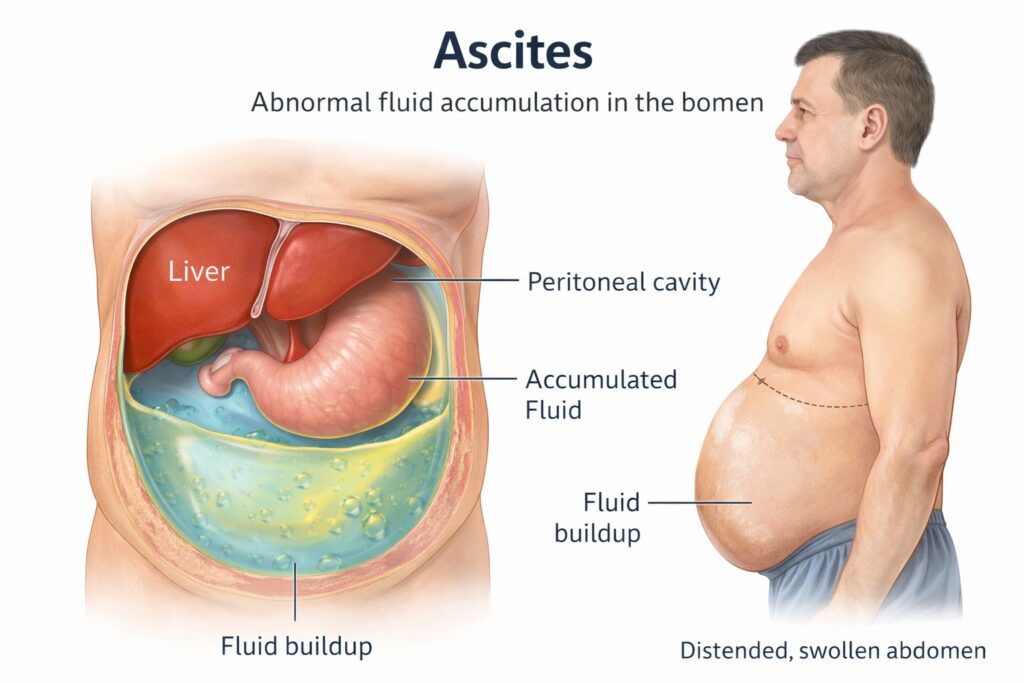
Ascites is a medical condition characterized by the abnormal accumulation of fluid in the abdominal cavity. The abdomen normally contains a small amount of fluid that lubricates the organs and allows them to move smoothly. However, when excessive fluid builds up between the layers of the peritoneum (the membrane that lines the abdominal cavity), it leads to a condition known as Ascites.
Ascites is most commonly associated with advanced liver disease, particularly Cirrhosis, but it can also occur due to heart failure, cancer, kidney problems, or infections. The condition can cause abdominal swelling, discomfort, difficulty breathing, and other complications if not treated in time.
Ascites is considered a serious medical condition because it usually indicates an underlying health problem that needs medical attention. Understanding the causes, symptoms, diagnosis, and treatment of ascites is important for early detection and proper management.
⸻
What is Ascites?
Ascites refers to the excessive buildup of fluid within the abdominal cavity. The fluid accumulates in the space between the organs and the abdominal wall, causing the abdomen to enlarge and become tense.
The condition often develops gradually but may sometimes appear quickly depending on the underlying cause. In many cases, ascites is a complication of Cirrhosis, which leads to increased pressure in the liver’s blood vessels and fluid leakage into the abdomen.
Ascites can vary in severity. Some patients may have only a small amount of fluid that causes mild discomfort, while others may develop severe abdominal swelling that interferes with breathing and daily activities.
⸻
Causes of Ascites
Ascites develops when fluid leaks from blood vessels or organs into the abdominal cavity. Several medical conditions can lead to this fluid buildup.
1.Liver Cirrhosis
The most common cause of ascites is Cirrhosis, which accounts for approximately 75–80% of cases. Cirrhosis causes scarring of the liver, which disrupts normal blood flow and increases pressure in the portal vein. This condition is known as Portal Hypertension.
As a result, fluid leaks from the blood vessels into the abdominal cavity.
Common causes of cirrhosis include:
• Chronic alcohol consumption
• Viral hepatitis
• Fatty liver disease
• Autoimmune liver diseases
⸻
2.Cancer
Certain cancers can lead to ascites, especially when cancer cells spread to the abdominal lining. This condition is called Peritoneal Carcinomatosis.
Cancers commonly associated with ascites include:
• Liver cancer
• Ovarian cancer
• Pancreatic cancer
• Colon cancer
• Stomach cancer
Cancer-related ascites may develop rapidly and often requires specialized treatment.
⸻
3.Heart Failure
Severe Congestive Heart Failure can also cause ascites. When the heart is unable to pump blood efficiently, fluid may accumulate in different parts of the body, including the abdomen.
Patients with heart failure may also experience swelling in the legs and difficulty breathing.
⸻
4.Kidney Disease
Kidney problems such as Nephrotic Syndrome can lead to fluid retention and ascites. In this condition, the kidneys leak large amounts of protein into the urine, which lowers blood protein levels and allows fluid to accumulate in body tissues.
⸻
5.Infections
Some infections affecting the abdominal cavity can also cause ascites. One example is Tuberculous Peritonitis, which occurs when tuberculosis infects the lining of the abdomen.
This condition is more common in developing countries and requires prompt treatment.
⸻
Symptoms of Ascites
The symptoms of ascites depend on the amount of fluid present in the abdomen. Mild ascites may not cause noticeable symptoms at first, but as the fluid increases, several signs may appear.
Common symptoms include:
1.Abdominal Swelling
One of the most noticeable symptoms of ascites is a swollen or enlarged abdomen. The abdomen may appear tight, stretched, or bloated.
2.Rapid Weight Gain
Patients with ascites may gain weight quickly due to fluid accumulation rather than fat.
3.Abdominal Pain or Discomfort
The fluid buildup can put pressure on internal organs, causing discomfort or pain.
4.Shortness of Breath
Large amounts of fluid can push against the diaphragm and lungs, making breathing difficult.
5.Loss of Appetite
Many people with ascites experience reduced appetite or early fullness while eating.
6.Nausea and Fatigue
General weakness, nausea, and fatigue are also common symptoms.
⸻
Diagnosis of Ascites
Doctors use several tests to diagnose ascites and determine its underlying cause.
Physical Examination
A healthcare provider may detect fluid in the abdomen by tapping on the abdomen or checking for shifting dullness during examination.
⸻
Ultrasound
An Abdominal Ultrasound is often the first imaging test used to confirm the presence of fluid in the abdomen.
Ultrasound can also help detect liver disease, tumors, or other abnormalities.
⸻
CT Scan
A CT Scan may be performed for a more detailed view of the abdominal organs.
⸻
Paracentesis
One of the most important diagnostic procedures for ascites is Paracentesis.
In this procedure, a doctor inserts a needle into the abdomen to remove a sample of the fluid. The fluid is then analyzed in a laboratory to determine the cause.
The test may check for:
• Infection
• Cancer cells
• Protein levels
• Bacterial growth
⸻
Treatment of Ascites
Treatment depends on the underlying cause and severity of the condition.
1.Lifestyle Changes
Patients with ascites are often advised to:
• Reduce salt intake
• Limit alcohol consumption
• Maintain a healthy diet
• Monitor body weight regularly
Salt restriction helps prevent fluid retention in the body.
⸻
2.Medications
Doctors often prescribe Spironolactone and Furosemide to remove excess fluid from the body.
These medications are known as diuretics and help the kidneys eliminate extra fluid through urine.
⸻
3.Therapeutic Paracentesis
In severe cases where large amounts of fluid accumulate, doctors may perform Paracentesis to remove the fluid directly.
This procedure can provide immediate relief from abdominal pressure and breathing difficulty.
⸻
4.Treatment of Underlying Disease
Managing the underlying cause is essential. For example:
• Treating liver disease
• Managing heart failure
• Treating cancer or infection
In advanced liver disease, a Liver Transplant may be required.
⸻
Complications of Ascites
If ascites is not treated properly, several complications may occur.
Spontaneous Bacterial Peritonitis
One serious complication is Spontaneous Bacterial Peritonitis, which occurs when bacteria infect the fluid in the abdomen.
Symptoms include fever, abdominal pain, and confusion.
⸻
Hernia
The increased pressure inside the abdomen can lead to hernias, particularly in the umbilical region.
⸻
Kidney Failure
Severe liver disease with ascites may lead to Hepatorenal Syndrome, a life-threatening condition.
⸻
Prevention of Ascites
Although ascites cannot always be prevented, reducing the risk factors can help lower the chances of developing the condition.
Preventive measures include:
• Avoid excessive alcohol consumption
• Maintain a healthy body weight
• Get vaccinated for hepatitis
• Manage liver diseases early
• Follow a balanced diet
• Seek medical attention for persistent abdominal swelling
Early diagnosis and treatment of liver disease can significantly reduce the risk of ascites.
⸻
Conclusion
Ascites is a condition in which fluid accumulates in the abdominal cavity due to various underlying health problems. The most common cause is Cirrhosis, but other conditions such as cancer, heart failure, kidney disease, and infections may also lead to ascites.
Symptoms often include abdominal swelling, discomfort, breathing difficulty, and rapid weight gain. Early diagnosis through imaging tests and procedures like Paracentesis is essential for identifying the cause and determining the appropriate treatment.
Management of ascites typically involves dietary changes, medications, fluid removal procedures, and treatment of the underlying disease. In severe cases, advanced medical interventions such as liver transplantation may be necessary.
Because ascites can indicate serious health issues, anyone experiencing persistent abdominal swelling or unexplained weight gain should seek medical advice promptly. Early treatment can improve outcomes and prevent life-threatening complications.
Sometimes persistent Hiccups may occur due to irritation of the diaphragm or abdominal pressure. If you want to understand this condition in detail, read our complete guide on hiccups causes, symptoms, and treatment.
According to the World Health Organization, liver diseases and infections are among the major causes of abdominal fluid accumulation such as ascites. You can learn more about liver health and disease prevention from the WHO guidelines.