
Introduction
Alcohol Dependence Syndrome is a serious medical and psychological condition in which a person becomes physically and mentally dependent on alcohol. People with this disorder feel a strong and uncontrollable urge to drink alcohol even when it harms their health, relationships, and daily life.
Alcohol dependence is considered a form of Alcohol Use Disorder. It develops gradually over time and often begins with casual drinking that eventually turns into habitual and compulsive alcohol consumption.
According to the World Health Organization, harmful alcohol use is responsible for millions of deaths every year worldwide and contributes to many diseases and social problems.
⸻
What is Alcohol Dependence Syndrome?
Alcohol Dependence Syndrome (ADS) refers to a condition where a person develops a strong craving for alcohol and cannot control their drinking behavior. The body and brain become accustomed to alcohol, making it difficult for the individual to stop drinking without experiencing withdrawal symptoms.
People with ADS often prioritize alcohol over other activities and responsibilities. Even when they know the harmful consequences, they continue drinking because their body has become dependent on it.
⸻
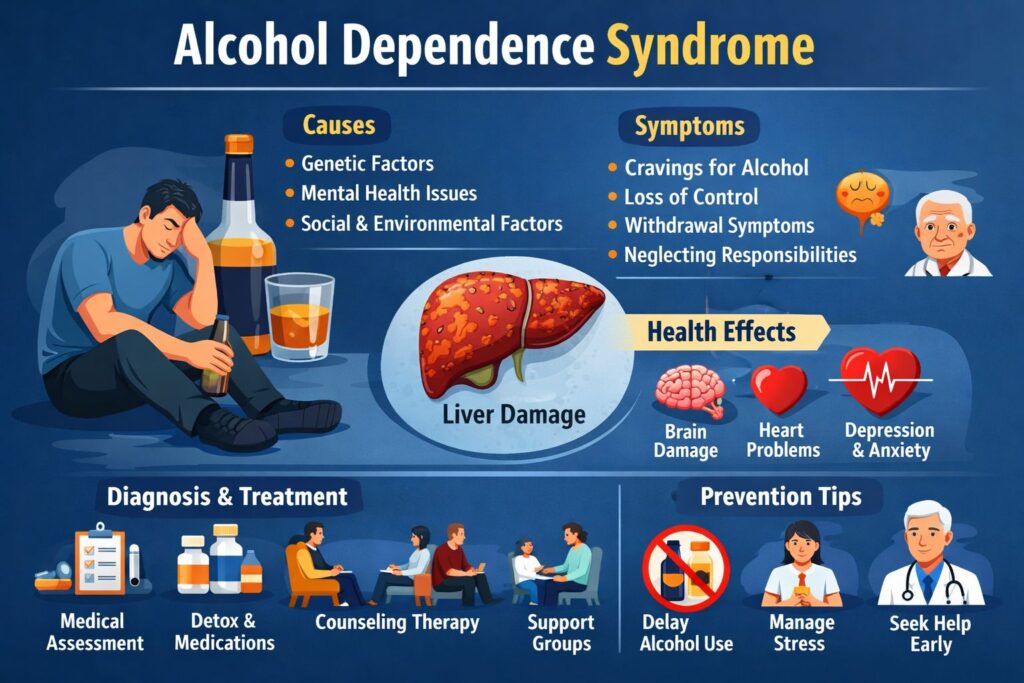
Causes of Alcohol Dependence Syndrome
Alcohol dependence does not develop from a single cause. It usually results from a combination of biological, psychological, and social factors.
Genetic Factors
Genetics can play an important role in alcohol addiction. Individuals who have family members with alcohol addiction are more likely to develop alcohol dependence themselves.
Psychological Factors
Mental health issues such as stress, depression, anxiety, and trauma may increase the risk of alcohol dependence. Some people start drinking alcohol as a coping mechanism to deal with emotional problems.
Social and Environmental Factors
The environment in which a person grows up can influence drinking habits. Easy access to alcohol, peer pressure, and cultural acceptance of drinking can increase the likelihood of developing alcohol dependence.
Early Alcohol Use
People who begin drinking alcohol at a young age have a higher risk of becoming dependent later in life.
⸻
Symptoms of Alcohol Dependence Syndrome
The symptoms of alcohol dependence can vary from person to person, but several common signs may indicate a problem.
Strong Craving for Alcohol
One of the most noticeable symptoms is an intense desire or craving to drink alcohol frequently.
Loss of Control
People with ADS often find it difficult to control the amount of alcohol they consume.
Increased Tolerance
Over time, the body becomes tolerant to alcohol, meaning a person needs to drink more to feel the same effects.
Withdrawal Symptoms
When alcohol consumption stops suddenly, the person may experience withdrawal symptoms such as anxiety, sweating, shaking, nausea, and irritability.
Neglecting Responsibilities
Individuals may neglect work, studies, family, and social responsibilities due to excessive drinking.
Continuing to Drink Despite Harm
Even after experiencing health problems or relationship issues, the person continues drinking.
⸻
Health Effects of Alcohol Dependence
Long-term alcohol dependence can severely affect physical and mental health.
Liver Diseases
Excessive alcohol consumption can lead to serious liver conditions such as Liver Cirrhosis and Alcoholic Hepatitis.
Brain and Nervous System Damage
Alcohol can damage brain cells, leading to memory problems, poor judgment, and difficulty concentrating.
Heart Problems
Heavy alcohol use increases the risk of high blood pressure, irregular heartbeat, and heart disease.
Mental Health Issues
Alcohol dependence often leads to depression, anxiety, and emotional instability.
⸻
Diagnosis of Alcohol Dependence Syndrome
Doctors diagnose Alcohol Dependence Syndrome based on a combination of medical evaluation, psychological assessment, and drinking history.
Healthcare professionals may ask questions about drinking habits, withdrawal symptoms, and the impact of alcohol on daily life. In some cases, blood tests and liver function tests are performed to evaluate the physical effects of alcohol.
Diagnosis may follow criteria outlined in the Diagnostic and Statistical Manual of Mental Disorders, which helps healthcare providers identify substance use disorders.
⸻
Treatment of Alcohol Dependence Syndrome
Alcohol dependence is treatable, and many individuals recover successfully with proper medical and psychological support.
Detoxification
Detoxification is the first step in treatment. During this process, alcohol is removed from the body while doctors manage withdrawal symptoms safely.
Medications
Certain medications can help reduce cravings and prevent relapse. These medications are prescribed by doctors as part of a comprehensive treatment plan.
Counseling and Therapy
Psychological therapy plays a crucial role in recovery. Counseling helps individuals understand the causes of their addiction and develop healthier coping strategies.
Support Groups
Support groups provide encouragement and emotional support for people recovering from alcohol dependence.
Programs like Alcoholics Anonymous help individuals share experiences and maintain sobriety.
Lifestyle Changes
Healthy lifestyle changes such as regular exercise, balanced nutrition, and stress management can support long-term recovery.
⸻
Prevention of Alcohol Dependence
Preventing alcohol dependence involves education, awareness, and healthy lifestyle choices.
Avoid Early Alcohol Use
Delaying alcohol consumption during adolescence reduces the risk of dependence later in life.
Manage Stress in Healthy Ways
Practicing relaxation techniques, exercise, and hobbies can help individuals cope with stress without relying on alcohol.
Seek Help Early
If a person notices signs of problematic drinking, seeking professional help early can prevent the condition from worsening.
⸻
When to See a Doctor
A person should consult a doctor if they:
• Feel unable to control their drinking
• Experience withdrawal symptoms when not drinking
• Notice alcohol affecting their work or relationships
• Have physical symptoms related to alcohol use
Early medical intervention can significantly improve recovery outcomes.
⸻
Conclusion
Alcohol Dependence Syndrome is a serious but treatable condition that affects both physical and mental health. Recognizing the symptoms early and seeking professional help can make a significant difference in recovery. With medical treatment, counseling, and strong support systems, individuals struggling with alcohol dependence can regain control of their lives and achieve long-term sobriety.
Persistent hiccups can sometimes be associated with digestive problems or alcohol consumption. Learn more about its causes and treatment in our detailed guide on hiccups.
For more information about alcohol-related health risks, visit the official resources of the World Health Organization.